
ONE CONTROL PLANE FOR ENTERPRISE AI
OneOps sits between your teams and Amazon Bedrock. Every request is checked against your rules, sent to the right model and written to the record, before it costs you money or exposes your data.
See OneOps in action
Discover how OneOps brings cost, security and governance into one unified control plane.
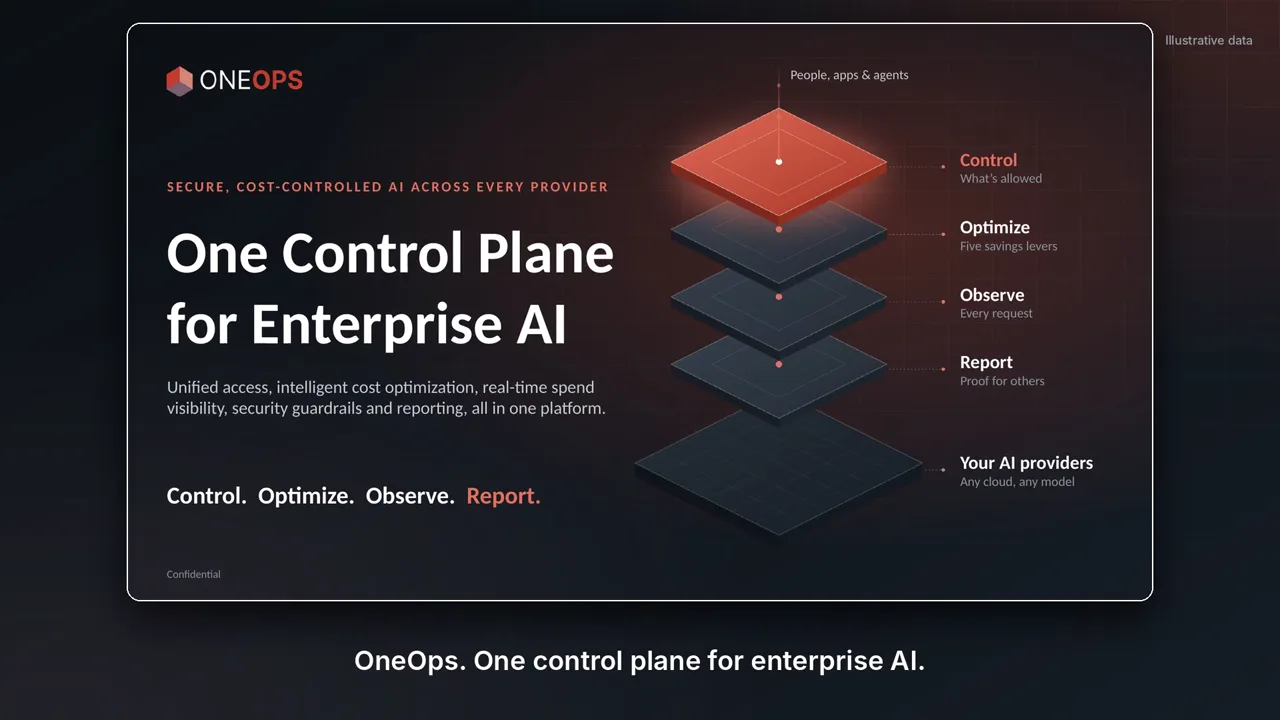
Two people have to say yes before AI can scale
The one who owns the budget, and the one who owns the risk. Today neither has a single place to see what is being spent or what is being sent.
No more surprise AI bills
Spending stops at the limit you set, not after the invoice arrives.
- A budget for every team, person and key
- At the limit: stop, slow down, or ask for approval
- Five levers that lower the cost of each request
- Chargeback by team, exported for finance
Nothing leaves without passing your rules
Guardrails check each request on its way to the model.
- Personal data and bank details masked or blocked
- Passwords and keys stopped before they reach a model
- Only the models you approve, per team
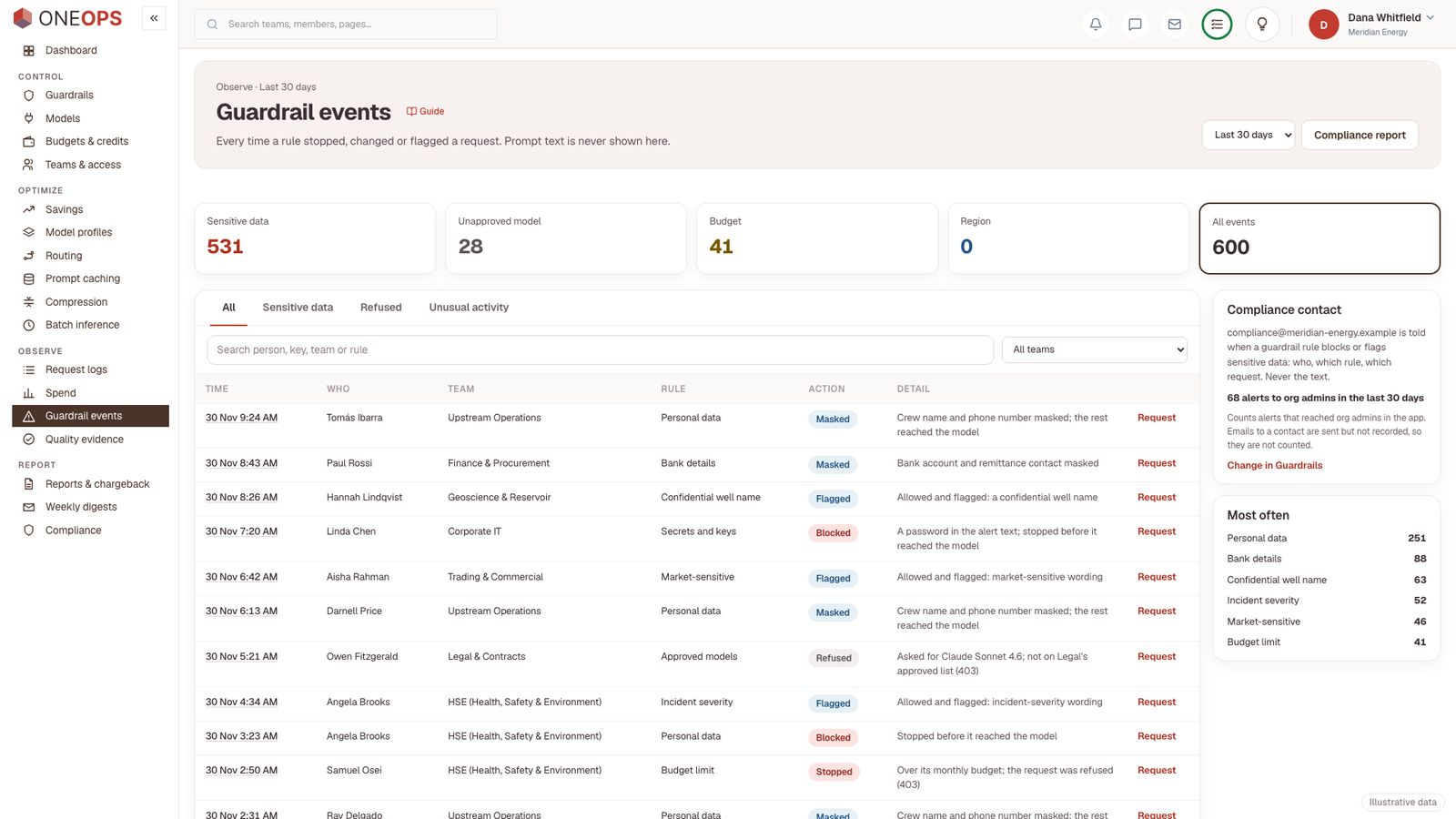
- Every event on record: who, which rule, which request
Watch every rule as it fires
OneOps checks each request before it reaches a model, and shows security teams what was masked, blocked, flagged or refused as it happens.
Events per minute
Live demoRules firing most
Guardrail events
Who, which rule, what happened. Never the prompt text.Illustrative data for a sample company.
See it working
Four screens answer the questions leadership, finance and security ask most.
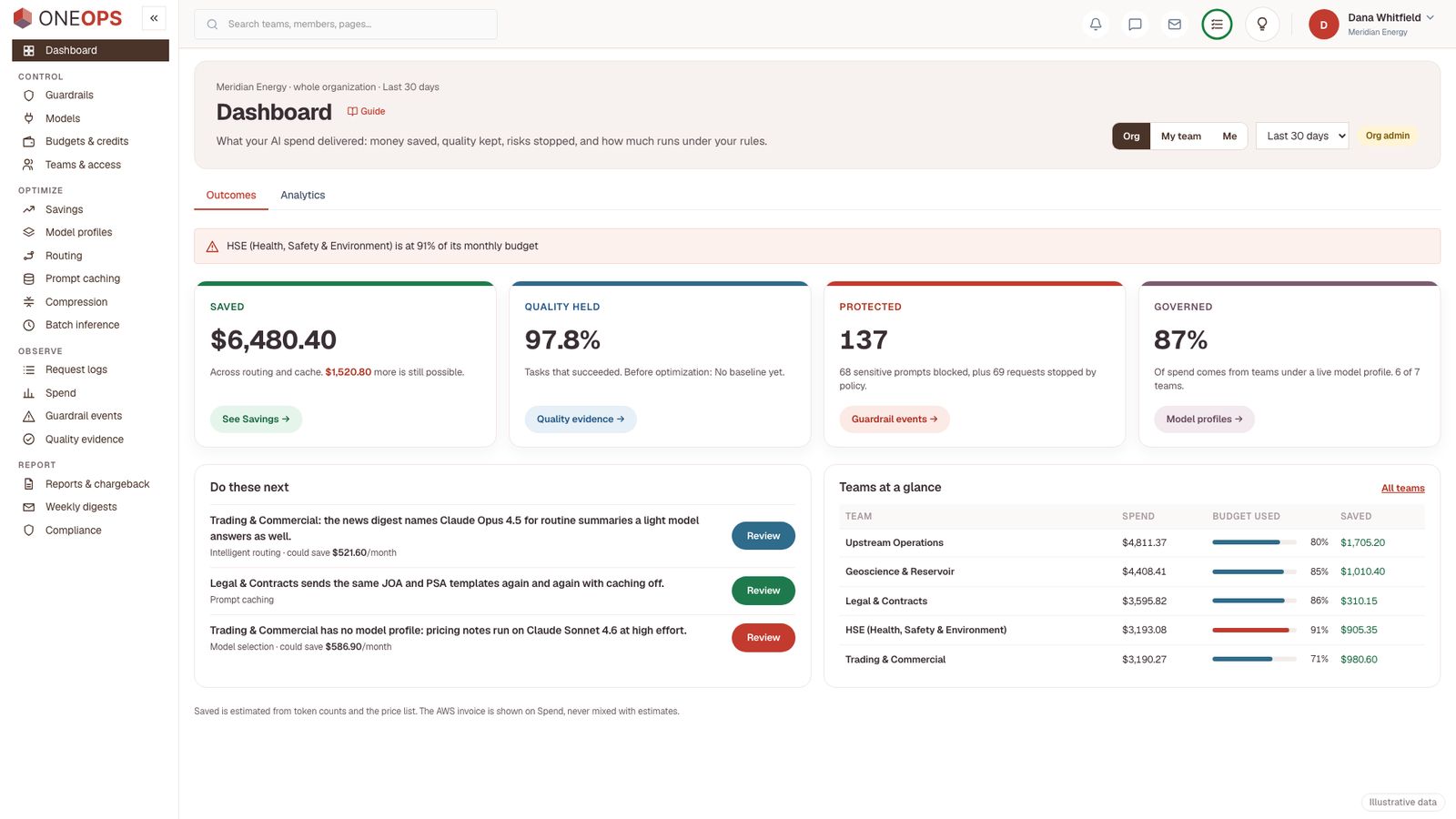
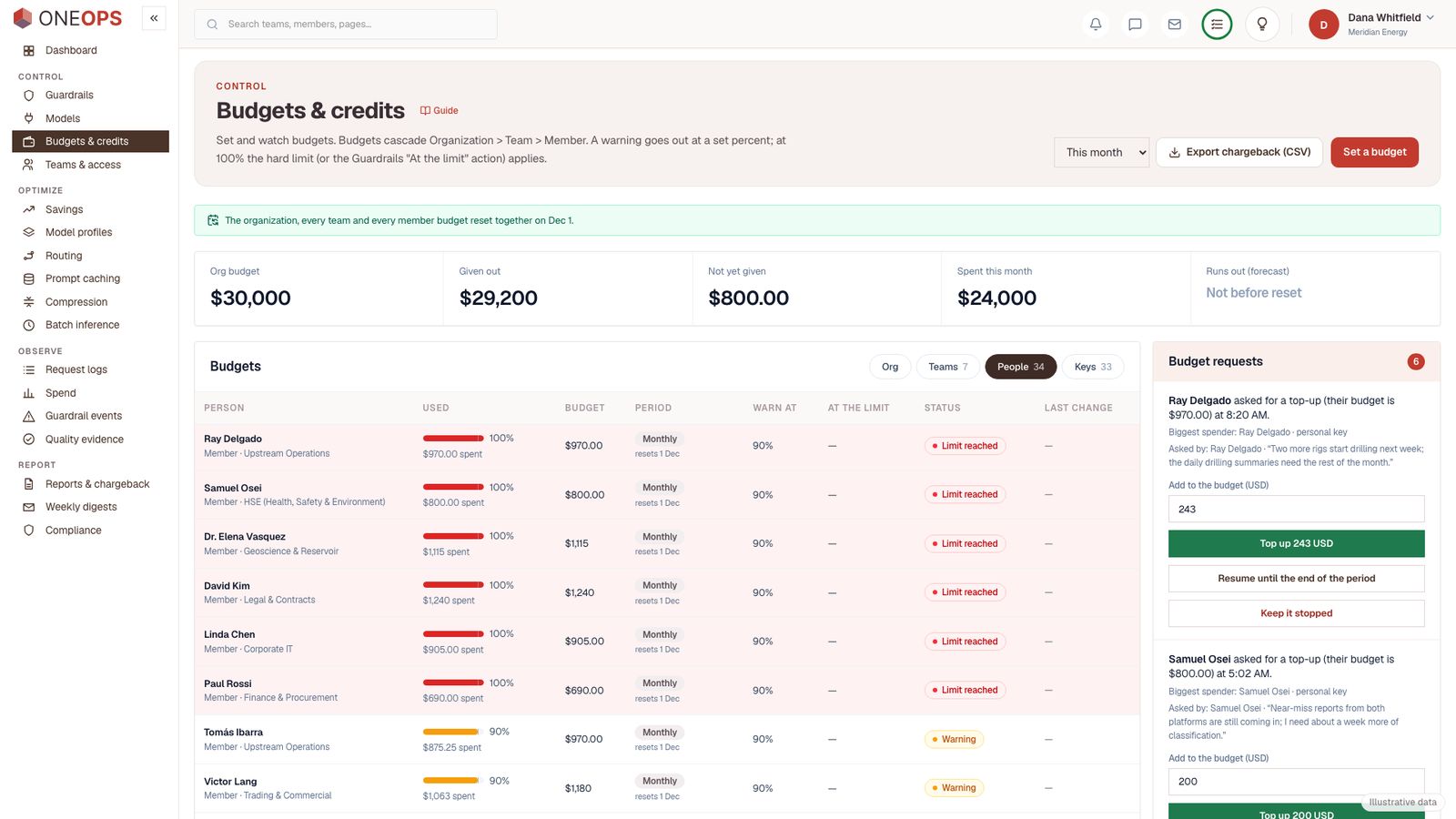
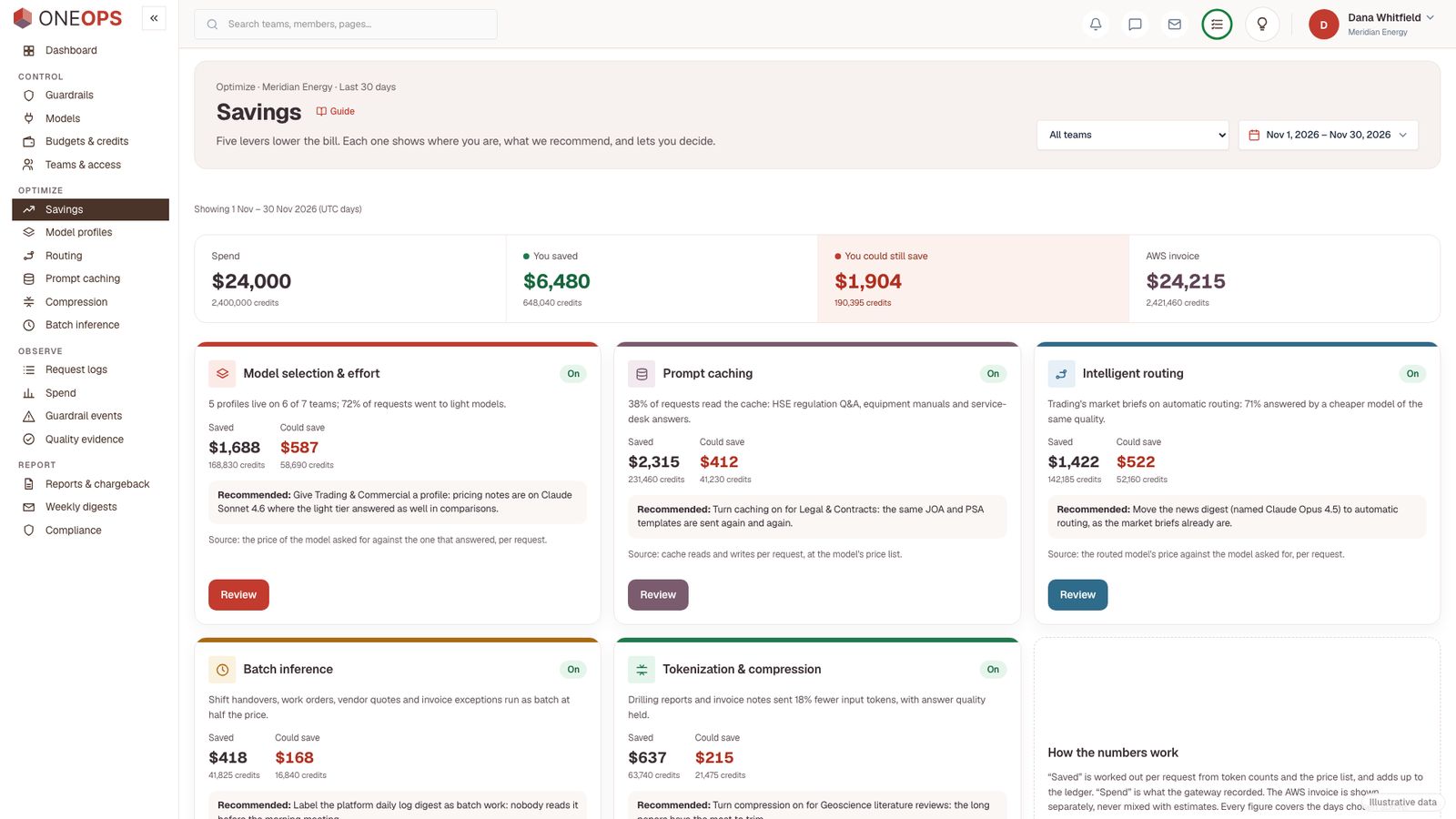
One dashboard for leadership: what was saved, whether quality held, what was stopped, and how much of your AI runs under your rules.
Screens show illustrative data for a sample company.
One layer between your teams and Bedrock
Your applications call OneOps the way they call a model today. OneOps applies your rules, then passes the request to Amazon Bedrock.
People, apps and agents
Each with its own key and budgetOneOps
Amazon Bedrock
Your account, your models, your regionsModel selection
Routine work runs on a right-sized model, not your most expensive one.
Prompt caching
The repeated part of a prompt is reused when the evidence says it pays.
Routing
Simple requests go to a cheaper model once quality is verified.
Batch
Work that can wait runs at the lower batch price.
Compression
Long prompts are shortened without changing their meaning.
It keeps paying back after day one
See what happened
Spend, savings and stopped requests, by team.
Cut the cost
Review the recommendation for each lever and decide.
Tighten control
Adjust budgets, approved models and rules.
Report results
A weekly digest for leadership and chargeback for finance.
Coming next for security and compliance
These are planned, not yet available. We share them so you can see where OneOps is heading.
What teams ask first
Does OneOps replace Amazon Bedrock?
No. OneOps adds a control layer in front of Bedrock. Your models, account and regions stay as they are.
Where does OneOps run?
In your own environment. It is self-hosted, so requests and logs stay inside your deployment.
How are budgets enforced?
OneOps checks the organization, team, person and key budgets before each request. At the limit it stops, slows down or asks for approval, whichever you chose.
Will cheaper models lower answer quality?
A cheaper model is used only for kinds of work where it passed a quality comparison. You can run a change in shadow first to see the effect before it goes live.
What do guardrail records contain?
Who made the request, which team, which rule fired, the action taken and the request reference. They do not show the prompt text.